
New hyperfixation just dropped. Hear me out: tea cosies. And pyjama cases. Maybe tray cloths.
Living on the ceiling
When I was little, I remember telling my dad that I’d lay in bed and look at the ceiling, imagining what it would be like if that was the floor. How it would be to walk around light fittings, avoid beams and sit in archways. He said he did that when he was young, too. That stayed with me, because I saw my dad as the ultimate artist.
My siblings and I grew up without television, so entertainment was a mix of Polly Pocket, Enid Blyton – and our strange little minds. We made coffins out of two high bar stools laid on their sides, which we’d fill with blankets and take turns being dead in. I would lay awake at my grandma’s house and make ‘shoe designs’ out of all the ways I could twist the oversized stretchy orange bed socks (sleep socks, we called them) onto my feet. I was often photographed asleep with things other than hats on my head. A colander. A deflated swimming arm band. The head of a mouse costume, with attached mob cap.
All this to say: I never had my imagination constrained by having too much to do. I didn’t look at an object and see just what it’s labelled to be. Why shouldn’t a colander be a hat?
So, when I look at a 1930s crochet and ribbon tea cosy, I don’t see an old-fashioned bit of kitchenalia.
From my viewpoint on the ceiling, I see a clutch bag.

Tea cosies
Two kinds, in my obsession.
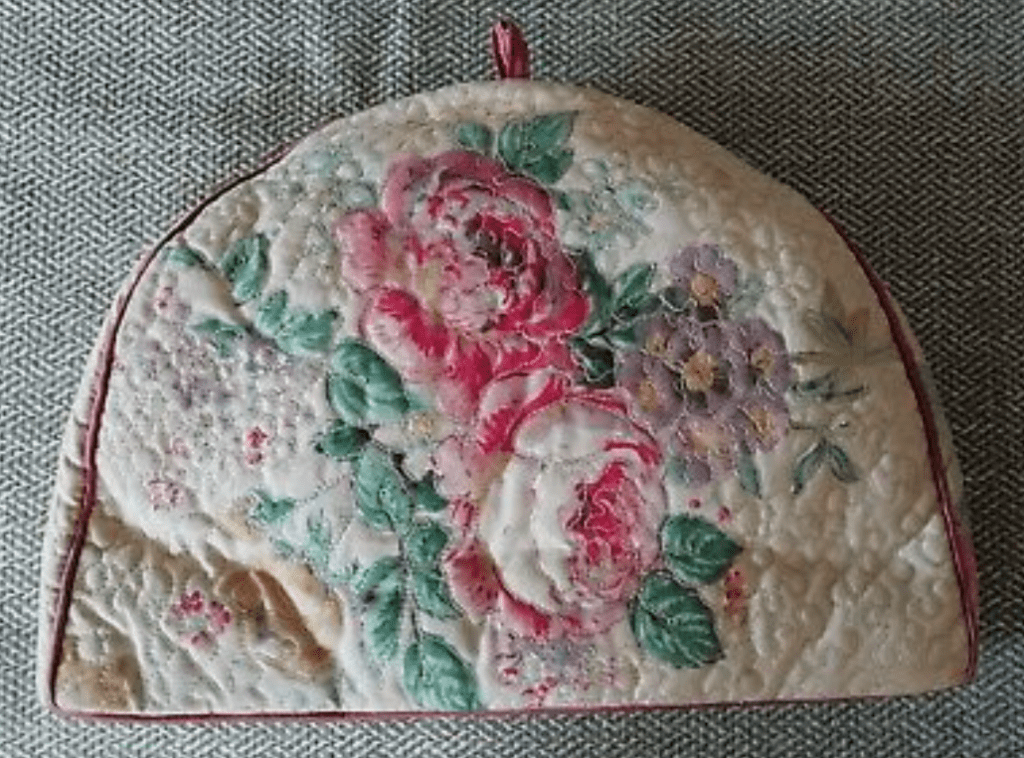
The first, a 1930s to 1950s padded affair, squishy and squashy – quilted, embroidered. Turn it upside-down and add a popper, and you have a lovely, scooshy clutch bag. Larger tea cosies could easily have straps sewn on for a proper handbag.
The second, a thing of a forgotten age: a delicate lace or crochet cover, rather than warmer. I look at this picture and see only one thing. That’s a top. Put ribbon straps on it and tie it at the back – it’s a top. It looks just like a 20s camisole.
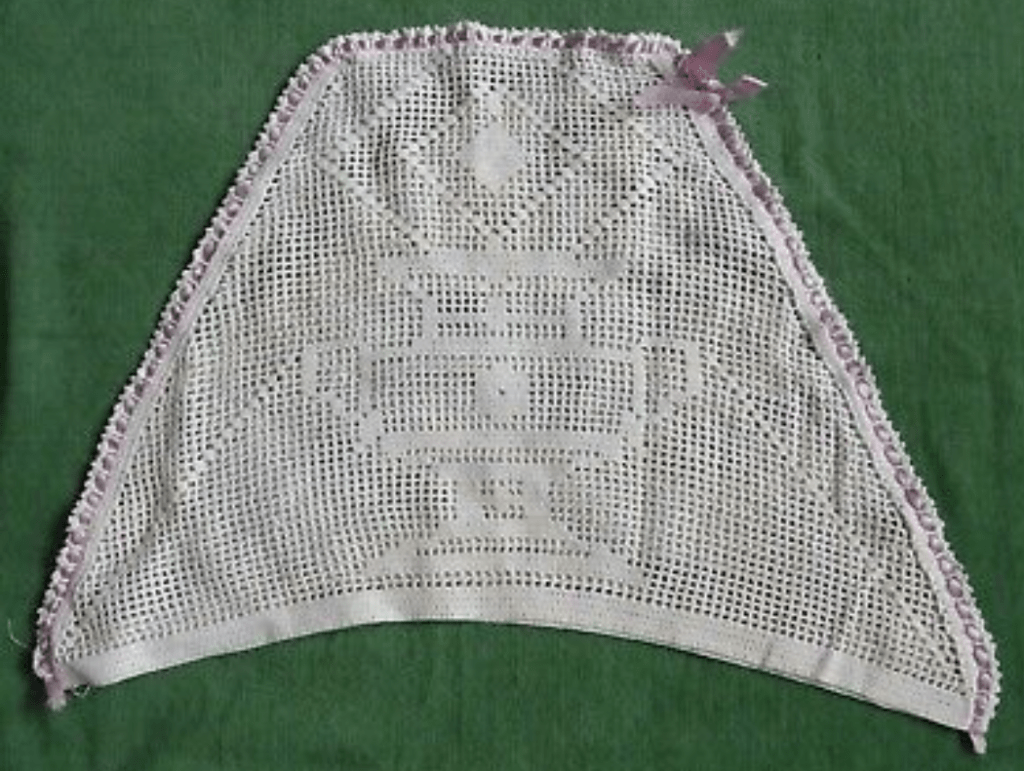
The splendid thing is that tea cosies have a front and a back – so either you use the double layer and have an in-built pretty lining for the front of your top (using less precious materials for the back), or you separate the two and have a beautiful front and back for your top.
Tray covers
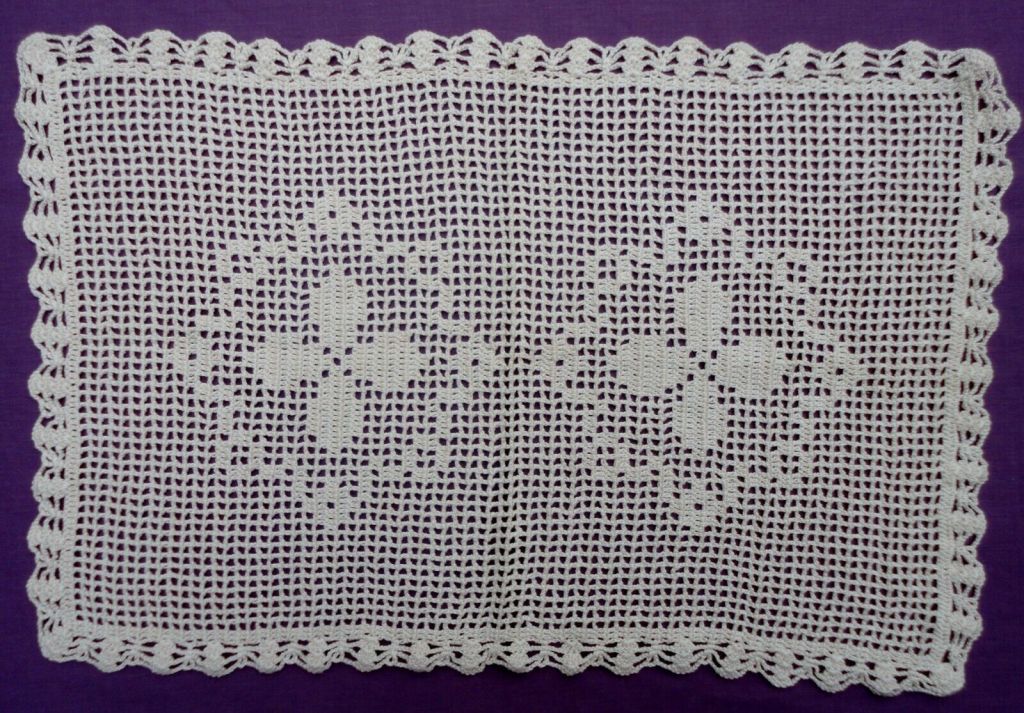
Are also camisoles. Wrap it around the body, sew up the back (perhaps add boob darts) and add ribbon straps. That’s LITERALLY how a 20s camisole was made.
This is a tray cover I bought recently on eBay, because it reminded me of an antique camisole I own that has fun nipple circles. It will make a perfect top.
Pyjama cases
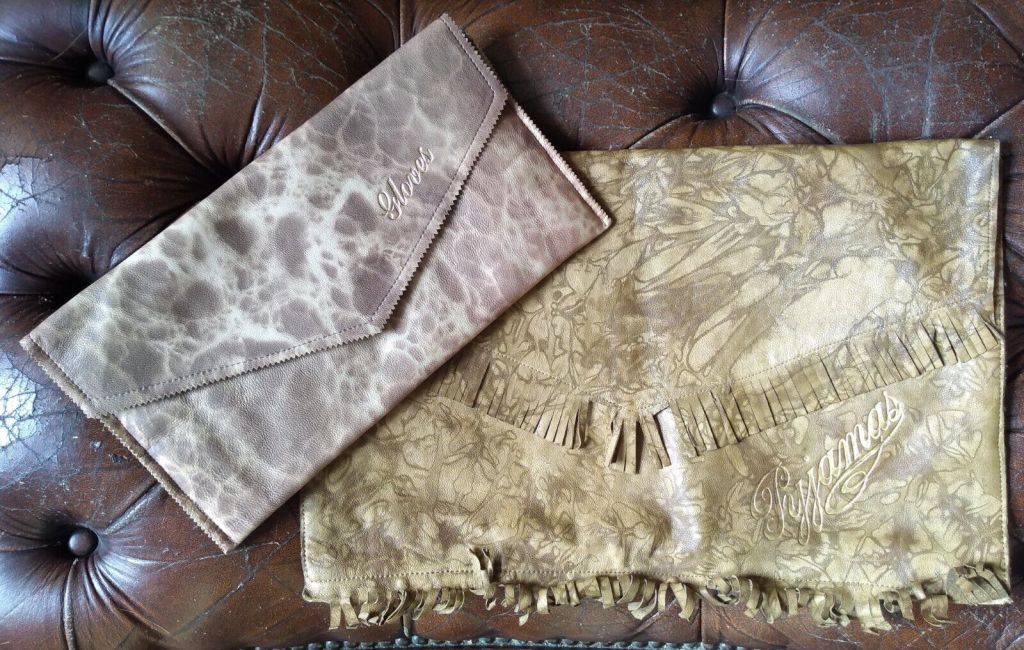
See also: glove or stocking cases. These are obviously clutch bags. Some are made of leather, so are ready-made clutches but most are soft, so need a bit of fabric-covered card in them for structure.
Knitting bags
Obviously…bags.
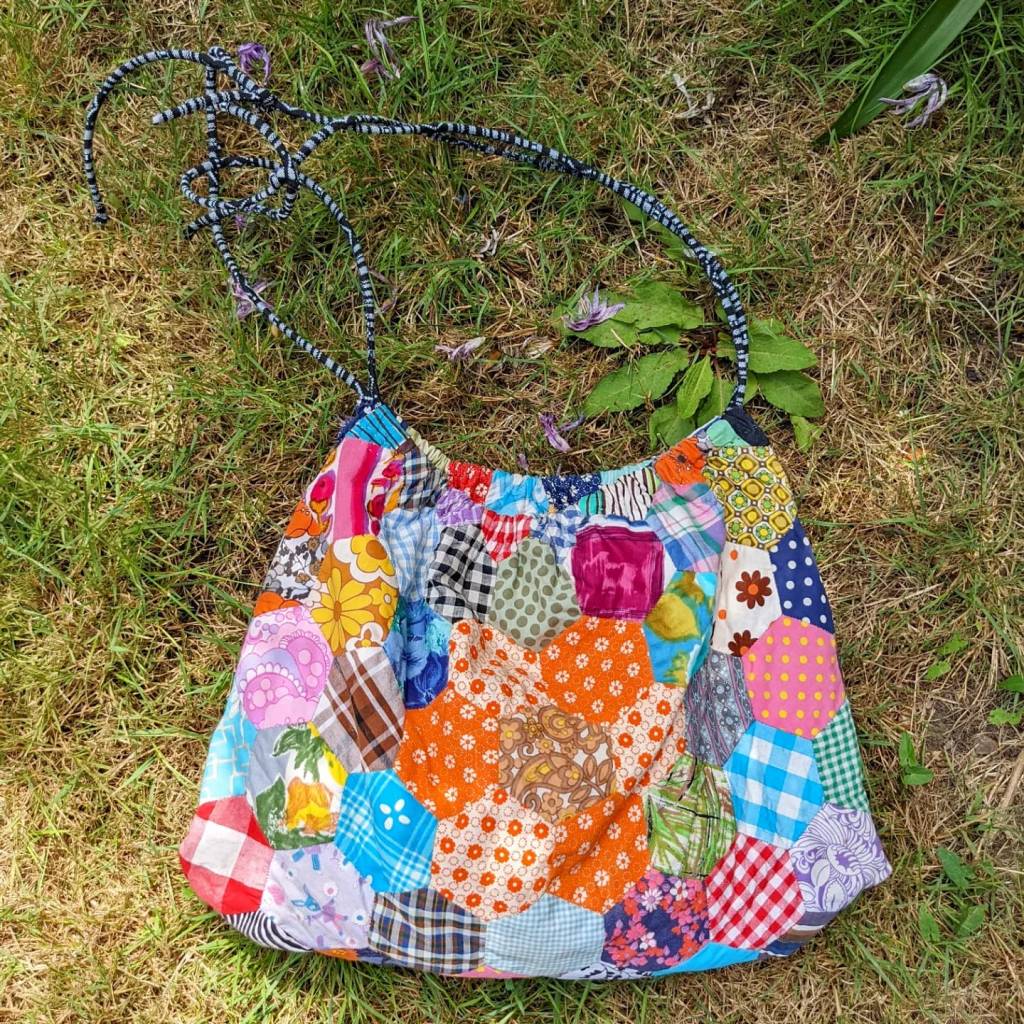
I favour a 70s knitting bag for the crazy patterns but these often had rigid plastic handles, for which I have a visceral dislike. Easily removed and replaced with fabric handles – or just some nice rope tied together in my case.
Little marvels
These things were made by women. Maybe women who didn’t get to go to university or have a job, who embroidered their fucking tray cloths instead.
Women’s art has always been treated as inferior to men’s. But what we can see in these household items is the beauty and craftsmanship that women have been commanding at their fingertips for millennia.
Lace, patchwork, knitting, quilting. The skill in even the most humdrum object is astounding, and yet ‘women’s work’ is underappreciated STILL.
Look around you for the ignored beauty. Live on the ceiling.
 Arch Creative
Am I right? Tell me!