
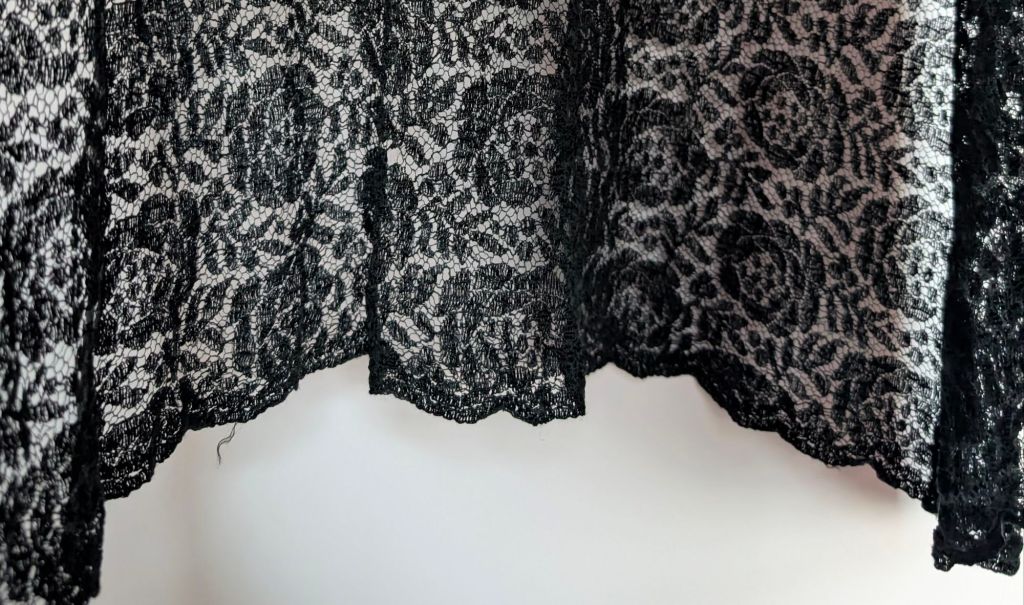
How do I know this charity shop dress is 1930s – 40s at the latest?
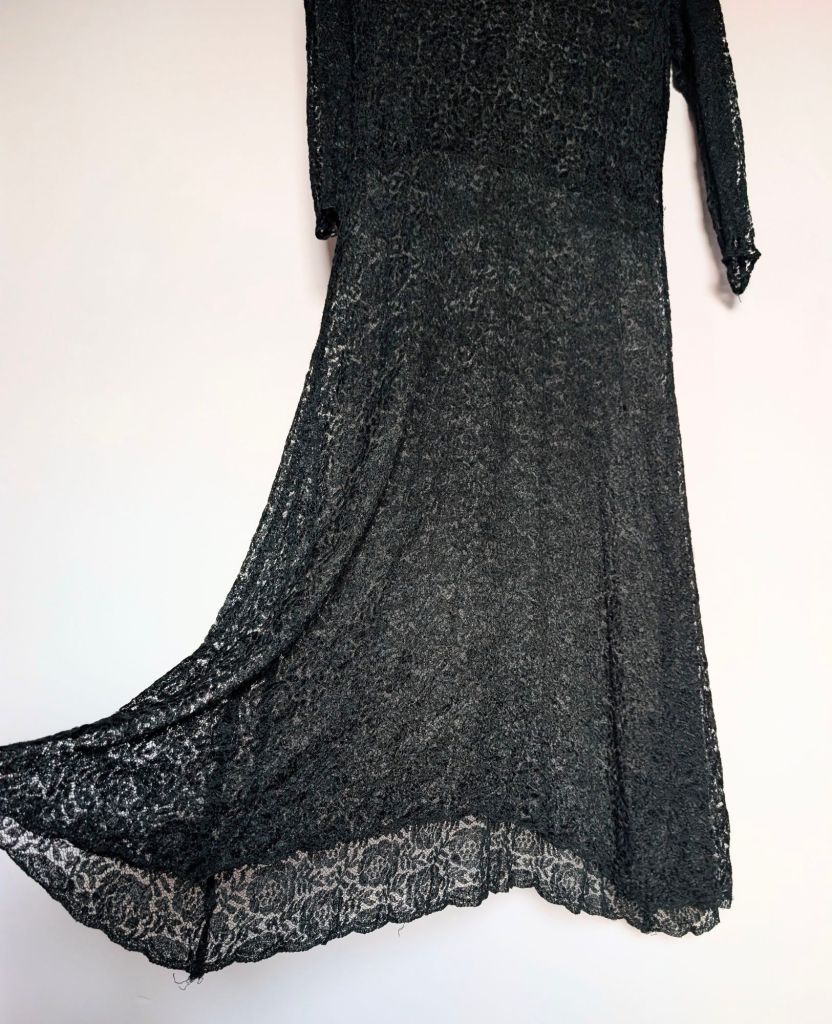
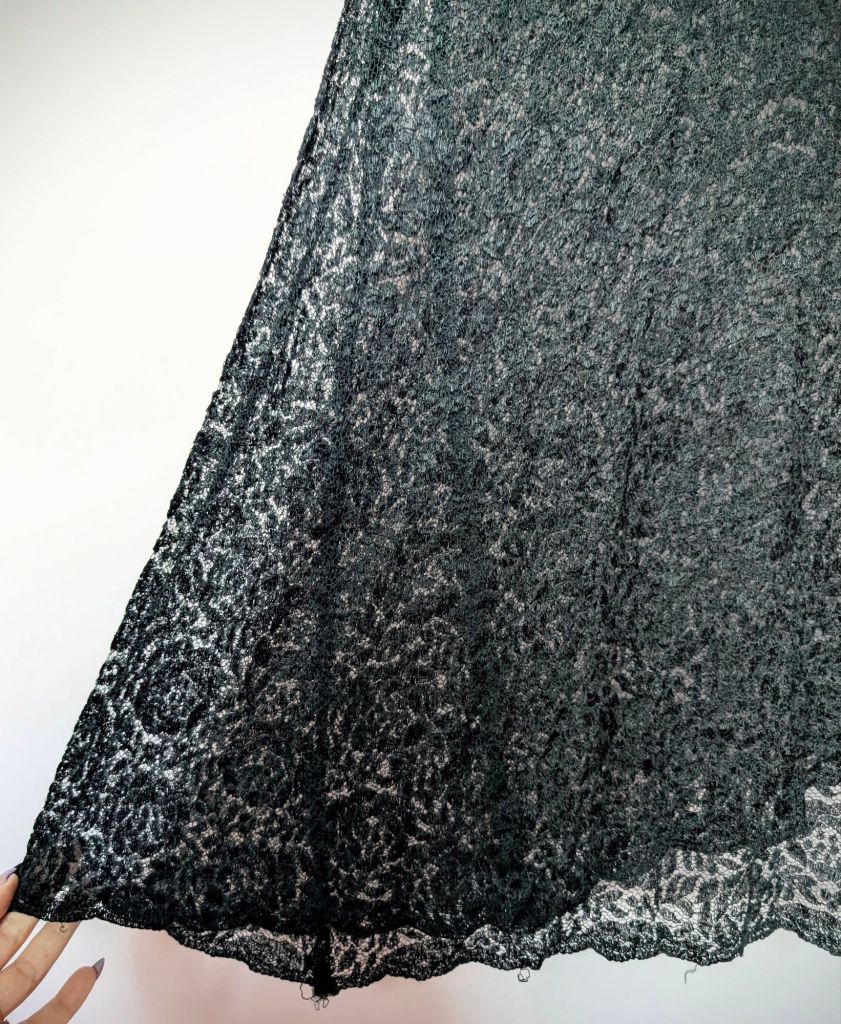
It’s a few things. The minute I spotted the lace, I clocked it was old. It just has a certain quality to it. It’s delicate, fragile.
When I touched it, I could feel it had no stretch in the fibres. That means it’s very unlikely to be even as young as the 60s.
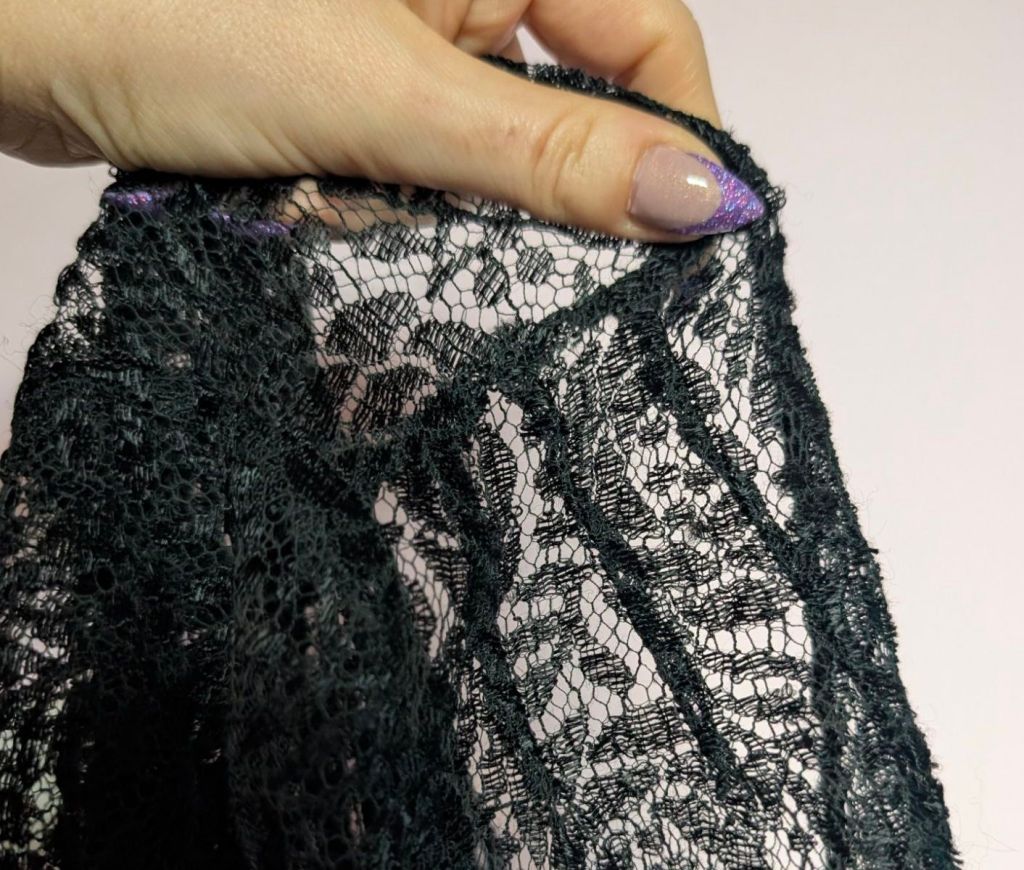
Because of its lack of stretch, it has tailoring darts to the shoulders, which I really only see in pre-1950s clothing. My 1940s gym suit pattern has them.
It has no labels.
It has no overlocking. The overlocking machine was invented in the late 19th century but was really only used on high-stress seams (like on girdles) until the 60s. You never see mass-manufactured or even handmade clothing without overlocked seams these days.
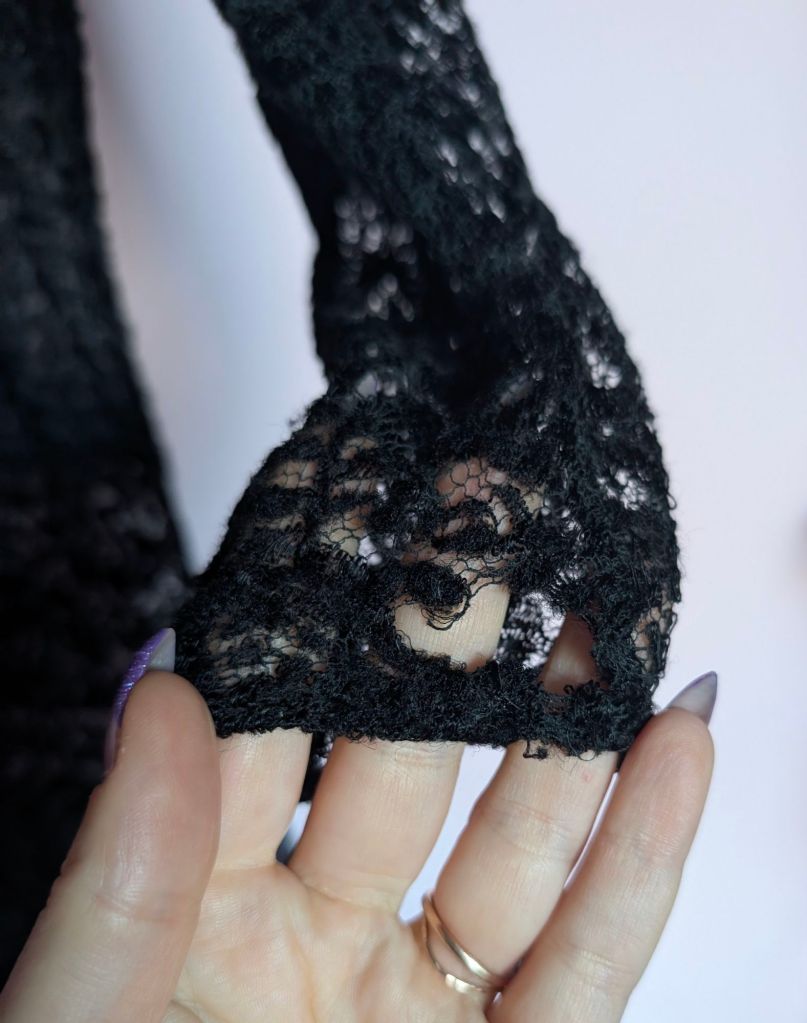
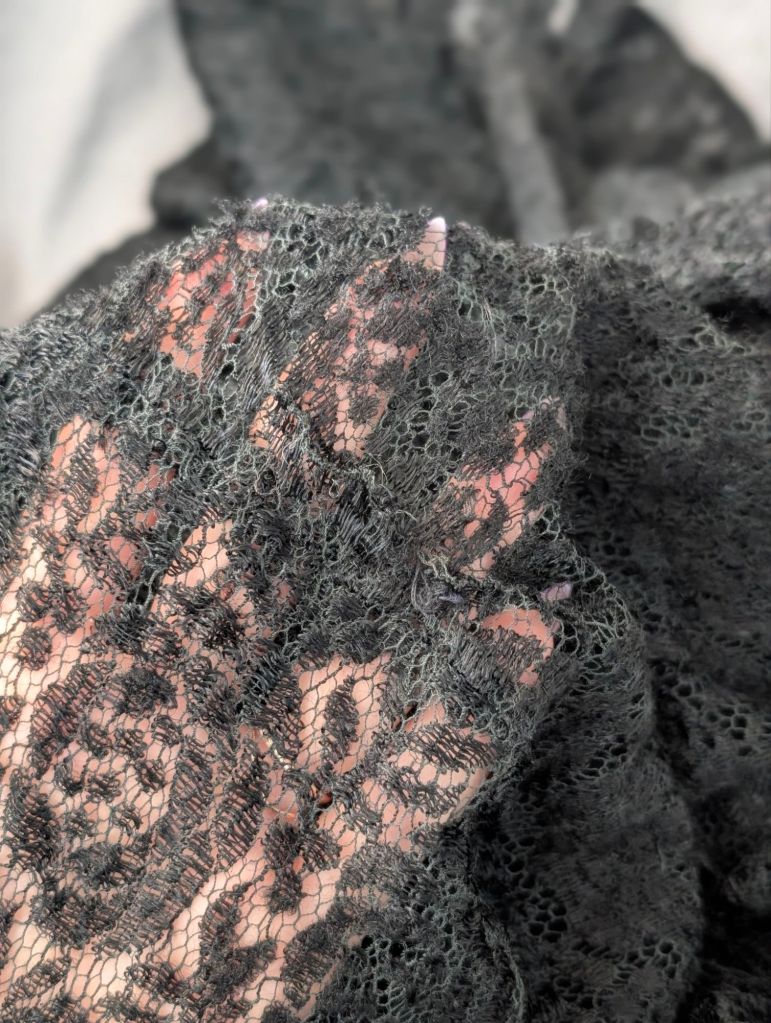
It has holes, and people don’t keep modern clothes when they get holes. They chuck ’em to landfill. Luckily, it’s hard to see the holes, or the charity shop might not have put this treasure out for sale.
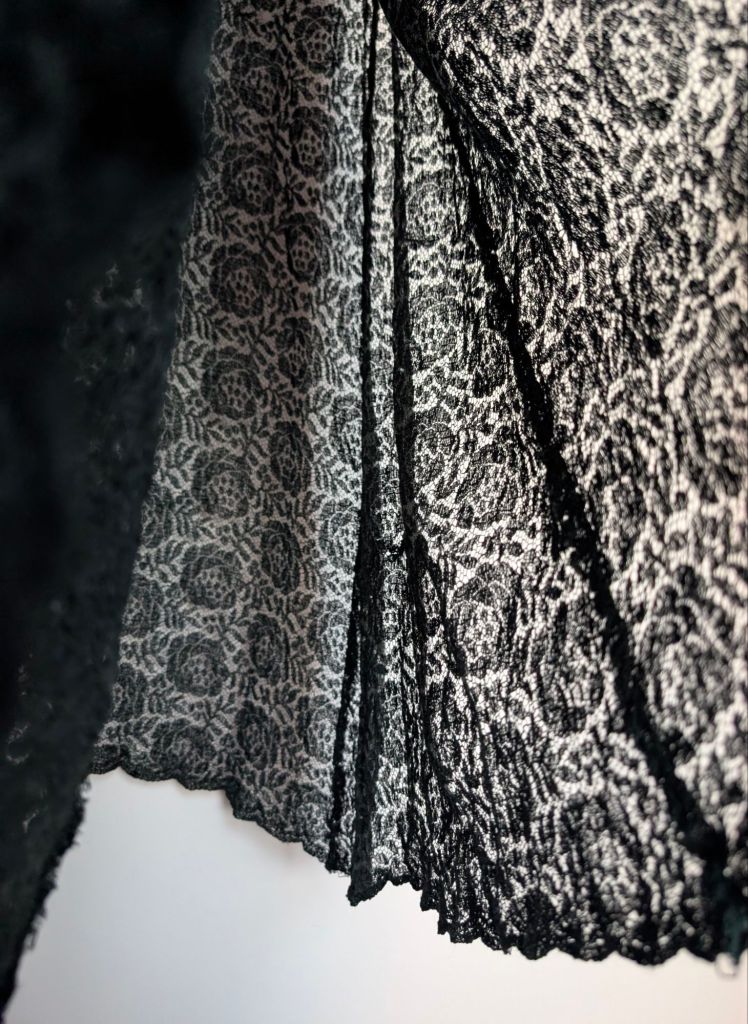
It has bias godets: triangular panels of fabric cut on a diagonal across the grain, to make the hem flare and flutter. Cutting on the bias is incredibly evocative of the 1930s, when designers (after Madeleine Vionnet) started using the technique to allow stretch and control drape in natural fabrics. Think of the straight-up-and-down column of the 1920s as cutting on the grain, and then think of the flowing gowns of 1930s Hollywood starlets. That’s bias.
I have one for comparison, but in much poorer condition. Having touched, examined and worn a 1930s lace dress before, it was instantly familiar.
So, a lovely £6 find. I will carefully hand wash it, mend the two holes and then I will wear it.
Oh – I remember I wrote something about wounded birds a long while ago. Here it is.
Shitty mending beats no mending



 Arch Creative
Am I right? Tell me!