
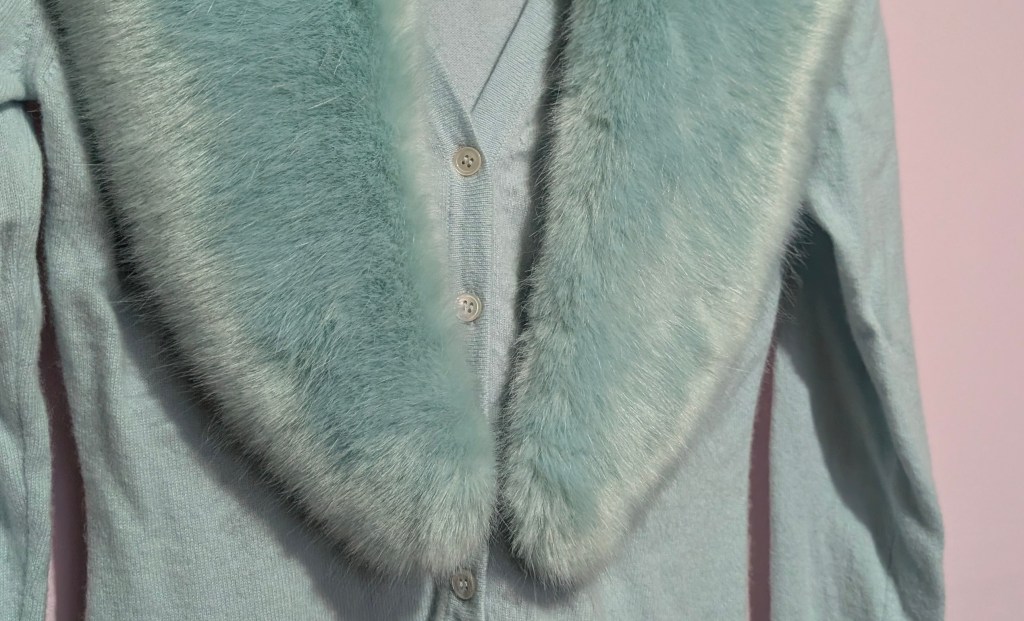
Cashmere is always amazing. But new cashmere is very expensive and, honestly, probably not the quality of vintage cashmere.
True vintage cashmere – 1950s fur-collared cardigans and Scottish Ballantyne sweaters – can be found easily online but likely for £50 to £100.
Luckily, cashmere can be found in nearly every charity shop in the land, sometimes modern and sometimes vintage.
We fear cashmere because we think it’s awful to wash. But that is a blessing in disguise: people wear their cashmere rarely (scared to wash it or reluctant to pay for dry cleaning) and then donate it because they never wear it. Or, and I can’t believe this but it seems to be true, they wear it a few times and then donate and buy new rather than wash it.
So, cashmere that is nearly good as new is widely available and for a fraction of the original cost.
That hand washing you fear? Under 10 minutes of easy nothing. You’ll kick yourself.
Experimenting with cashmere
I have washed cashmere before but I wanted a cardigan and I was interested in experimenting.
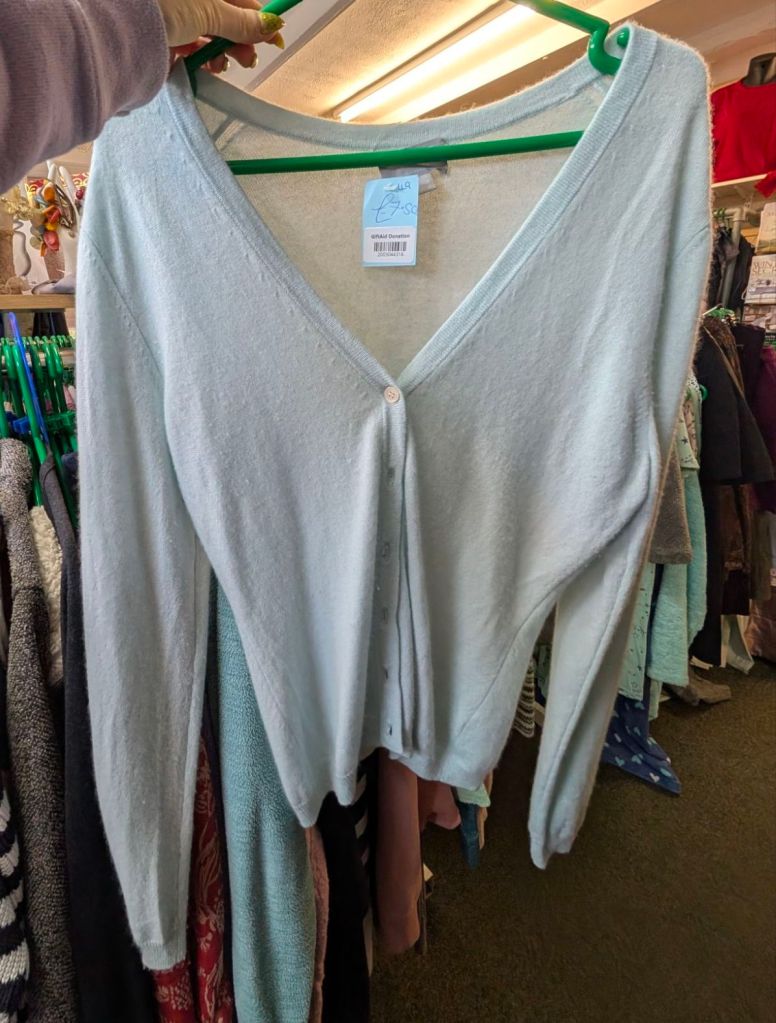
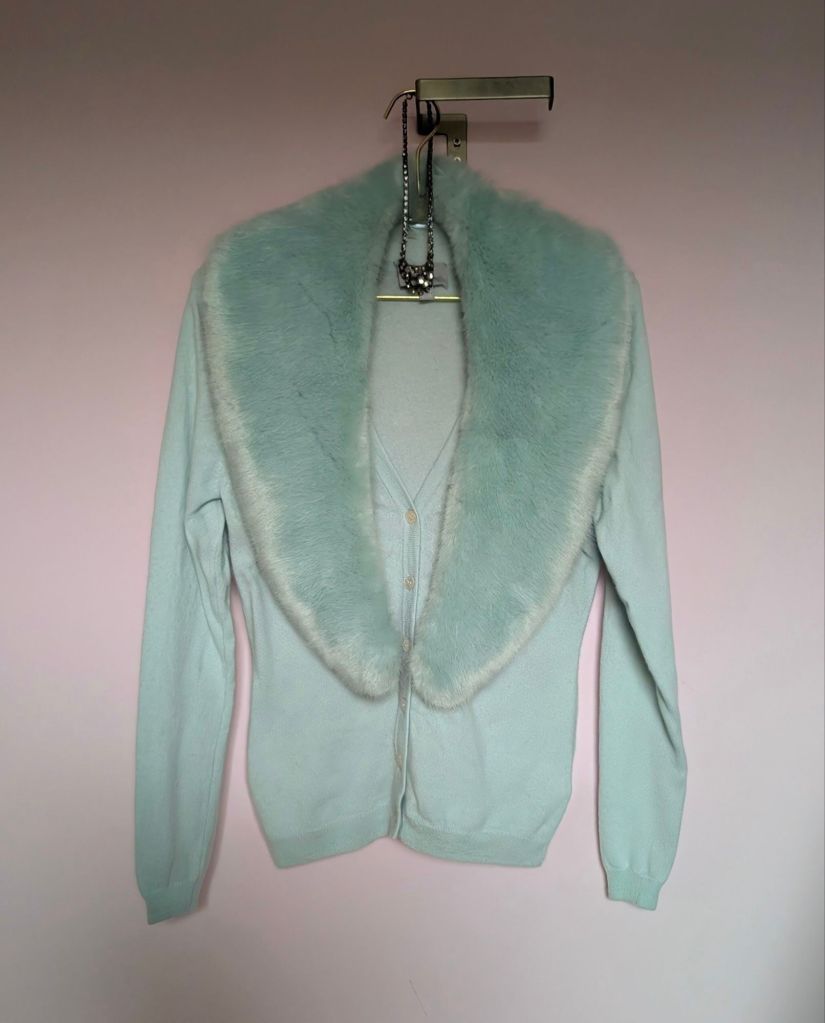
First charity shop I went in, I found a soft, icy-blue cardigan from Pure, which is a modern cashmere company. It’s a large size but that doesn’t matter because cashmere has a great drape, and I like to button cardigans up wrong so they’re cropped anyway.
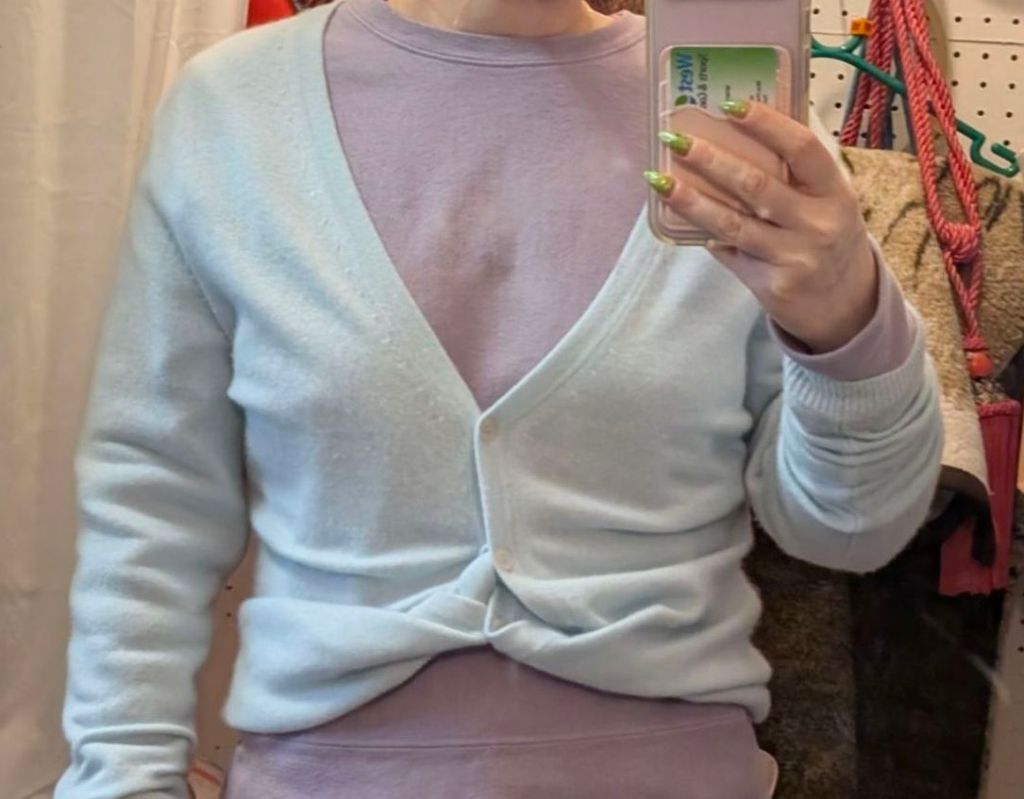
It had some light pilling, which is easy to remedy, and a little purple dot on the inside of one arm. She was looking a little sad in general.
Perfect for my experiment. Let’s get her gussied up!
Washing my cashmere – five minutes
Tepid to warm water
Cashmere is obviously delicate, so we need warmish water. Hot water enters the fibre and can cause shrinking, which is what everyone fears. I had room for this to shrink so it wouldn’t have been a tragedy, but shrinking is unpredictable and I didn’t want it to be misshapen.
As long as you don’t go too hot, you don’t need to be afraid of washing cashmere. It actually loves being washed and this sad, limp cardigan is going to fluff right up after her bath.
Disinfectant
I added just a drop of Zoflora to the water even though I hate it, because I didn’t want to use a washing detergent that would foam up (requiring longer in the water to rinse), but I did want to kill bacteria. No, I don’t have a special cashmere detergent.
I’m sure MANY busybodies would tell me that Zoflora is terrible for cashmere (it’s actually not even intended for clothes lol) but as I didn’t spend £150 on this cardigan, I’m really not bothered. One drop in a bath of water is not going to kill anyone. Except microbes.
Buying secondhand lets us be bold and we have to pick our battles. Onward!
Gentle handwash
With the cardigan laid in the warm water, I lightly swooshed her up and down. I didn’t leave it to soak because, again, we don’t want to saturate to the point that water gets inside the fibre of the wool.
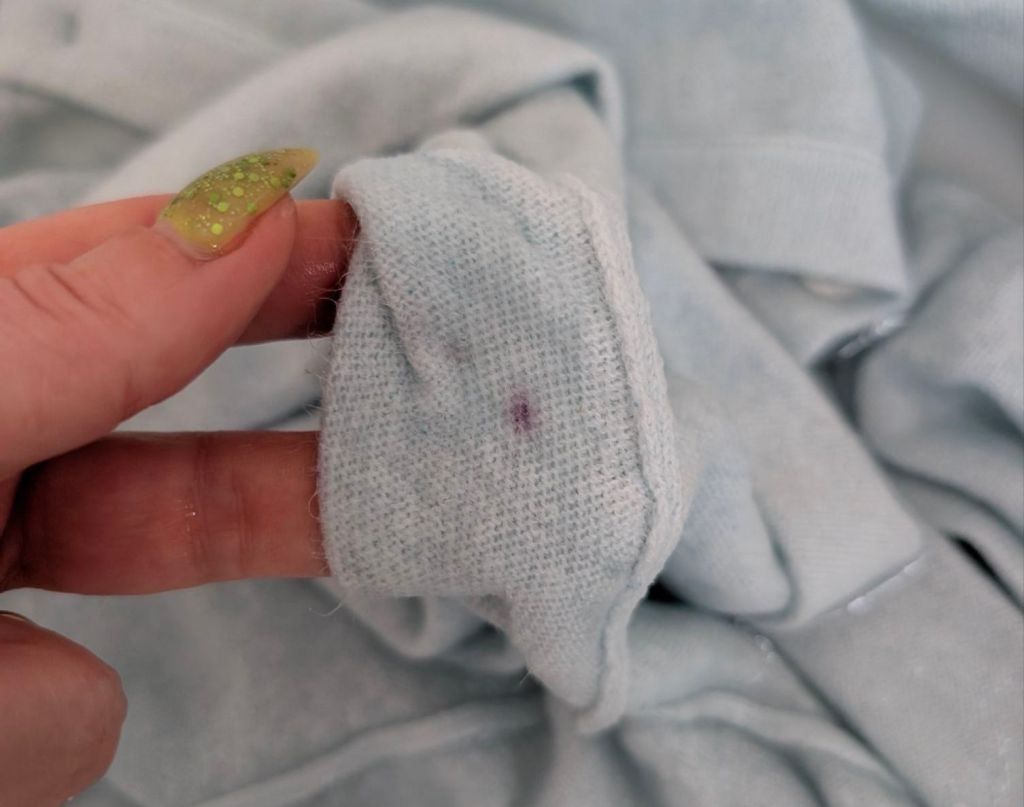
I found the wee purple dot and swooshed water through that patch, but I didn’t rub it in case it made it worse. It either comes out or it doesn’t; I can always put some tiny stitches there to cover it if it bothers me (it won’t).
Towel roll – one minute
I always lay whatever I’m washing at the head of the bath, reshaped, so the excess water can run down it. Then, with a towel folded in half, I grab it by the shoulders or waistband and roll it up.
Laying the towel sausage in the bath, I squidge down to get as much water out as possible. Some people leave it like this but I think once the towel is soaked through, you’re just putting stress on the item for not much gain.
Lay flat – one minute
I unrolled the towel and laid the cardigan flat (shaping it how I wanted it to dry) on a dry towel on my rack over the bath. Drying flat is vital because hanging can stretch cashmere with the weight of the remaining water.
The towel is important because even though cashmere won’t hold a tonne of water – if it hasn’t entered the fibres – it will take the shape of e.g. the bars of your airer and that’s annoying because we don’t want to iron it.
Real, serious wool people – knitters and so on – use vertical pins to shape garments very precisely as they dry. I am not a real or serious person.
Debobble – two minutes
I’m a pretty confident (reckless) debobbler, but as cashmere is supposed to be gorgeously fuzzy, a debobbler isn’t for this.
I manually snipped any tiny pills, which usually happen under the arms and on the shoulders, with teeny sewing scissors. Make sure they’re sharp so you can cut close to the pill, not the sweater.
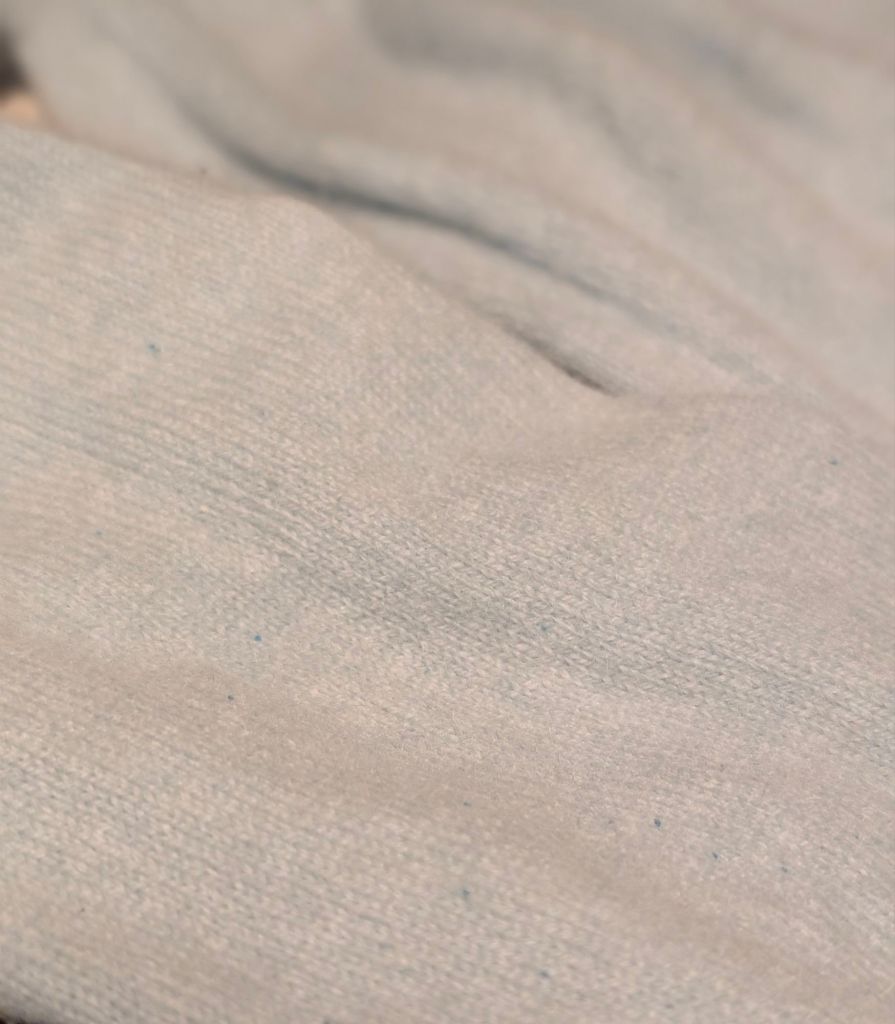
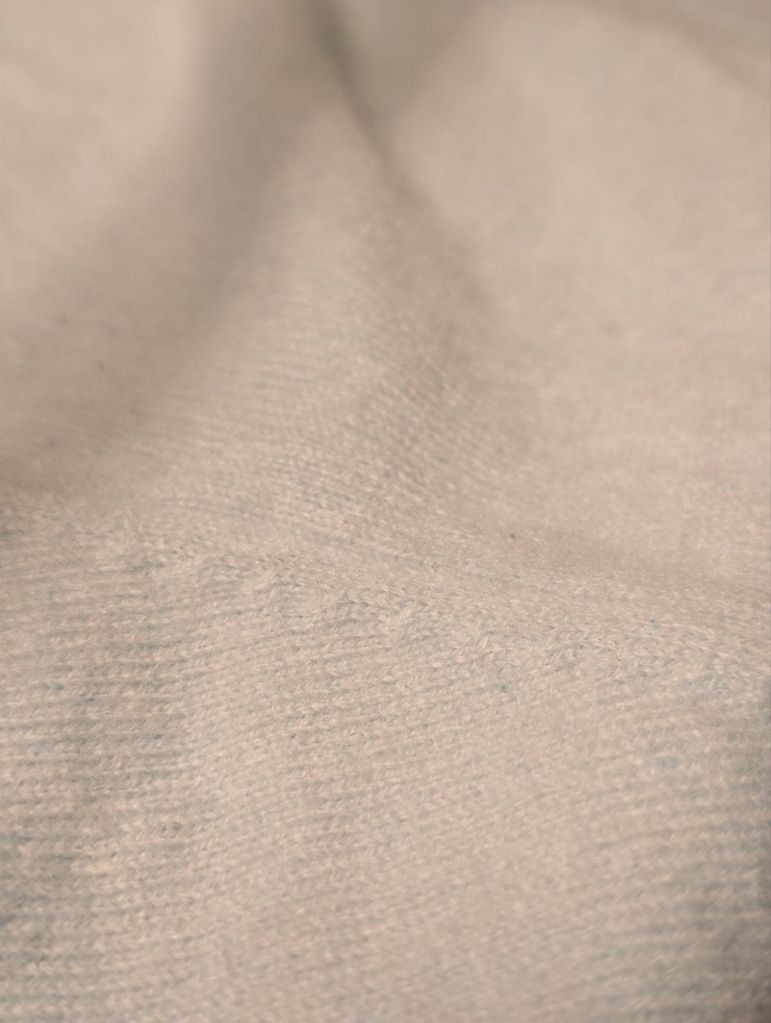
Bonus points: get a cashmere comb for a couple of quid. They’re quite scary at first (sounds like ripping!) but great for actual bobbles, which are more likely if you have a cashmere mix or a very old item. I had some real bobbles inside my cardigan and the cashmere comb took ’em right off.
And she’s done!
That took nine minutes in total. Nine minutes? We’re throwing out cashmere because we’re afraid of nine minutes’ work?!
Well shit, keep on doing it. I’ll be waiting with my arms outstretched and my £7.50 burning a hole in my pocket.


Am I right? Tell me!